
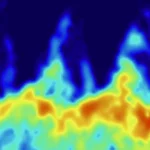
When we try to understand something complex, a single clue is rarely enough. If you hear someone speaking, you can recognize their voice through pitch, rhythm, emphasis, and many other details. In a similar way, XFinder’s technology can use multiple frequency bands to create a more detailed picture of what is being examined.
A conventional measurement can, in simple terms, be described as sending out a signal and analysing the echo that comes back. XFinder’s approach instead uses multiple frequency bands within an extremely short period of time. Each frequency can be affected differently by the properties of the material being examined. When the reflections are collected together, they form a pattern that contains more information than any individual signal can provide.
It can be compared to a musical chord. A single note tells us one thing, but several notes together can tell us which chord we are hearing. In the same way, the combination of several radar reflections can create an electromagnetic fingerprint. The system then analyses this pattern to understand what is likely present in front of the sensor and what condition it is in.
Another advantage of using multiple frequency bands is that a temporary disturbance does not necessarily determine the result. If one part of the measurement is affected, the rest of the pattern can still contain useful information. This can make the technology more robust in real-world environments where conditions are constantly changing.
When the system also follows patterns over time, it can build an understanding of what is normal and identify changes. This means that the focus does not have to be on a single measurement, but can also be on how a condition develops over time.
That is at the heart of XFinder’s approach: instead of trying to understand reality through a single number, we analyse an entire pattern.